Rose Marie Bertrand

 Rose Marie Bertrand with granddaughter Marie
Rose Marie Bertrand with granddaughter Marie
March 20, 1943 — July 9, 2015

MADISON, WI — Rose Marie Leona Wnek Bertrand, age 72, of Madison, Wisconsin, passed away on July 9th, 2015.

Rose Marie was born on the south side of Chicago, to Bernice (Zajac) Wnek Miller and Joseph Wnek on March 20, 1943. Rose Marie attended St. Roman’s grammar school, Our Lady of Good Counsel grammar school and Visitation High School in Chicago and moved to Madison at age 17 to attend Edgewood College. Rose Marie attended UW-Madison for graduate school, where she met the love of her life, Michael Bertrand. Rose Marie and Michael married at St. Paul’s University Catholic Center in Madison on August 29th, 1970.

Simon Rosenberg Misreads Wisconsin

 Wisconsin State Journal front page — Sep 4, 1952
State Journal front page — Sep 4, 1952.

It's like being hit in the face by a friend, blind-sided. I always liked Simon Rosenberg, who presents himself as mild, thoughtful, and above faction. Provoked by Francesca Hong’s near win in the governor’s primary election in Wisconsin, he’s now decided that the Democratic Socialists of America (DSA) are a communist scourge that must be driven out of the Democratic Party. Exaggerated, you say? Check out his Substack. It appears to be starkly out of character and definitely is deeply ironic considering that worry about Joe McCarthy’s native state set him on this path. McCarthy did massive damage to Wisconsin as he did to the entire country and it is not hard to hear an echo of his menacing voice in this development.

The Tusi Couple

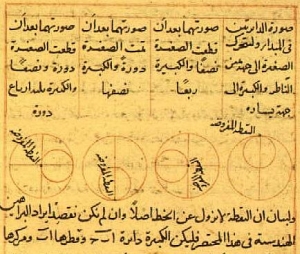
 Tusi-Couple-13th-Century
The original Tusi Couple (13th century ms).

The Tusi Couple goes back to the account of Persian astronomer and mathematician Nasir al-Din al-Tusi in the mid thirteenth century (see image here from a contemporary manuscript in the Vatican library, courtesy Wikipedia). It was a mathematical model appearing in a work called Tahrir al-Majisti (Commentary on the Almagest), the Almagest being Ptolemy's canonical second century opus on mathematical astronomy informing all work on this subject in Islamic and European lands through Copernicus and beyond. In the Tusi Couple, a circle one half the diameter of a larger circle moves interior to the larger circle and always tangent to it, rotating with the same angular velocity but in the opposite direction. The remarkable fact is that a given point on the inner circle traces out a straight line segment in the course of its movement. Having moving circles trace out a straight line was a big deal in the circle-centered Ptolemaic tradition.

Generating an Ellipse from Rotating Vectors

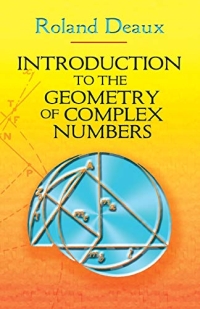
 Deaux cover

Roland Deaux highlights this beauty:

If two vectors issued from a fixed point \(O\) have given but different magnitudes, and if they rotate about \(O\) with constant and opposite angular velocities \(\omega\) and \(-\omega\), the fourth vertex of the parallelogram having the two vectors for a pair of adjacent sides describes an ellipse (\(E\)) of center \(O\).

The theorem is in his book Introduction to the Geometry of Complex Numbers on p. 75 of Howard Eves' English translation available in a cheap Dover reprint, an unbelievable bargain at $9.99.[1] The book was originally published in French in 1947.

The point \(O\) is the center of the ellipse, the intersection of the major and minor axes. See an animation below illustrating the theorem.

Hoffmann Comes for Lee Enterprises and the Wisconsin State Journal

 Capital Newspapers on Fish Hatchery Rd.

Lee Enterprises is a large Iowa-based newspaper chain which owns the St. Louis Post-Dispatch, the Omaha World Herald, and many others, including the Wisconsin State Journal in Madison, the second largest newspaper in the state.[1] David Hoffmann bought them on December 30, 2025. The deal involves Hoffman buying $35 million of new Lee stock, so he now owns over 50% of the stock of this publicly owned corporation[2] and becomes (probably at deal signing) the chairman of the board with the ability to approve all other board members. Hoffmann professes an affection for newspapers as boosters of their local communities with coverage of high school football of the kind he apparently experienced as a young quarterback — the hard-hitting investigative role is presumably a thing of the past. He definitely believes newspapers can be turned into profit centers, a function Lee has ingloriously failed at, hence the transition. This is momentous for Lee of course, but also for all the newspapers they own and the communities they serve; what his accession might mean remains to be seen.

Henri Pirenne on the Medieval Economy

 Pirenne cover

The European economy collapsed between 800 AD and 1,000 AD, even the term “dark ages” inadequate to describe the catastrophe. The marauding Northmen, Saracens, and Hungarians brought this about, the massive security threat bringing commerce to a halt and forcing every locale onto the defensive. There was little communication and virtually no trade between communities, each manor a small and, when luck held, self-sustaining economic unit. There was no margin for error and much suffering when a crop failed. Craftsmen like blacksmiths and carpenters worked in manorial workshops to provide essential services like repairing plows.

The clouds started to recede about 1,000 AD, and Henri Pirenne explains the revival in this magisterial work, Economic and Social History of Medieval Europe — see my beat-up old copy on the right ($1.25!). There are 219 pages of text, each one packed with detail and adding to the overall picture.

The Erdös-Ginzburg-Ziv Theorem

 Mathematical Puzzles cover

I've tried my hand at a few of Peter Winkler's stumpers in Mathematical Puzzles[1] with limited success when I lighted on this innocuous-looking one on page 43:

Even Split. Prove that from every subset of \(2n\) integers, you can choose a subset of size \(n\) whose sum is divisible by \(n\).

Aha! One I understand and can no doubt address with some application. Sometimes you can get an idea of the general solution by working through the problem for small \(n\). \(n=1\) and \(n=2\) are easy and \(n=3\) isn't too bad, but \(n=4\) leads to a rat's nest of special cases. I knew trouble was imminent after trying Gemini ("Prove that from every set of 8 integers, you can always choose a subset of size 4 whose sum is divisible by 4"). Several things jumped out:

• It's possible to feel sorry for Gemini as it engages in some world class wheel-spinning.
• Examining cases for small \(n\) brings zero illumination.
• The problem is well known as the Erdös-Ginzburg-Ziv Theorem (EGZ).[2]

Ivan Niven's Proof that \(\pi\) is Irrational

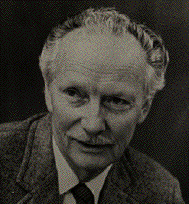
 Ivan Niven
Ivan Niven (1915-1999)

Ivan Niven gave a one page proof that \(\pi\) is irrational in 1946.[1] I had to work a bit to understand it, so thought a write-up was in order. The proof is by contradiction. Niven starts by assuming that \(\pi = a/b\) for positive integers \(a, b\). Then define:
\begin{align*}
f(x) = f_n(x) = \frac{x^n(a-bx)^n}{n!},
\end{align*}
for some positive integer \(n\). I'm generally going to stick to the notation \(f(x)\) in what follows, otherwise things get a bit top-heavy. Just keep in mind that \(f(x)\) depends on \(n\).

Liouville's Inequality and Liouville Numbers

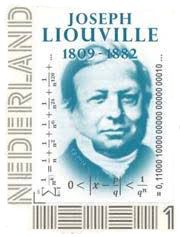
 Liouville Stamp

Liouville was the first to produce transcendental numbers.[1] These "Liouville numbers" are of the form:
\begin{align*}
\frac{1}{a} + \frac{1}{a^{2!}} + \frac{1}{a^{3!}} + \frac{1}{a^{4!}} + \cdots,
\end{align*}
where \(a\) is a positive integer. The key is Liouville's inequality:[2]

For every real irrational algebraic real number \(\alpha\) of degree \(n\), there exists a positive number \(C\) such that for arbitrary integers \(p\) and \( q \; (q > 0) \):
\begin{align*}
\left|\alpha - \frac{p}{q}\right| > \frac{C}{q^n}.\tag{1}
\end{align*}

Lebesgue's Proof of the Weierstrass Approximation Theorem

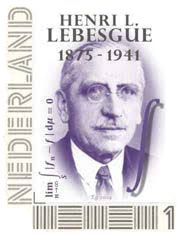
 Lebesgue Stamp

The Weierstrass Approximation Theorem states that a real continuous function on an interval can be uniformly approximated as close as desired by polynomials. That is, given a continuous real function \(f: [a,b] \rightarrow \mathbb{R}\) and an \(\varepsilon > 0\), there is a polynomial \(p(x)\) such that \(|f(x)-p(x)| < \varepsilon\) for all \(x \in [a,b]\). Weierstrass first proved this theorem in a fruitful but unintuitive way in 1885.[1] Lebesgue's proof of 1898, presented here, takes a natural approach that Euclid would have appreciated.[2] Weierstrass proved the theorem towards the end of his career when he was 70 years old; Lebesgue's proof was in his first published paper at the age of 23. Lebesgue stitches together three principles:

1) A continuous function on an interval can be uniformly approximated by a polygonal line.

2) A polygonal line can be represented as a constant plus a sum of functions of the form \(a|x-b|\).

3) The function \(|x|\) can be uniformly approximated by polynomials on an interval.

Pages

Subscribe to Ex Libris RSS